
Alliances fight wars effectively only when they share an endgame. If Israel acted without US knowledge, then the military alliance is operating without real coordination at the level of strategic targeting. Neither picture is reassuring in a war that is no longer regional in its consequences. Prem Panicker continues his must read daily blog on the Gulf War.

The delegations from the US and Iran head to Islamabad on Friday, carrying a ceasefire that is already fraying, a Strait that is technically open and practically closed, and a negotiating agenda that would challenge even parties actually negotiating in good faith, which these groups are not. Prem Panicker continues his must read blog on the Iran War.

The LPG squeeze on India's restaurant sector is the quotidian face of a deeper crisis.

'Without ground troops the US will not be able to oust the Iranian Islamic regime. Political change does not happen just by using bombs or planes.'
As settlement in dollars has become difficult due to sanctions imposed against Iran, India and Iran will explore other currencies like the euro, yen and dirham to resolve the stalemate over payment for oil imports at their meeting later this week in Tehran.

Oil imports are a third of India's total import bill.

It cannot, however, use the money to invest in India or buy shares or companies.
The US is working with countries, including India to reduce their dependence on Iranian oil, a top official has said, noting it understands the energy needs of New Delhi and its long-standing ties with Tehran.

'We are profoundly energy-dependent on the Gulf. That dependency must now be redirected towards the United States, because we require American permission to procure oil.' 'We additionally require Iranian permission to acquire oil from that source. So India now has to seek two separate permissions merely to secure its energy supply.' 'Should we be compelled to source from America, or from Venezuela -- which is, in effect, American-controlled supply -- that will inevitably carry a price premium, an elevated shipping cost, and a considerably extended delivery timeline, given the distances involved.'

Israel and the United States had a plan. Iran punched back. And now the Gulf is reeling, the world is beginning to feel the pain and, as on date, no one in Washington or Tel Aviv appears willing to admit that the punch has landed, notes Prem Panicker, continuing his must-read blog on the war in the Middle East.

'There is no shortage of fuel whatsoever.' 'India is stock surplus as far as petrol and diesel are concerned.'

Sensex heavyweight Reliance Industries fell 2.76 per cent. In percentage terms, major laggards were Yes Bank, Indusind Bank, RIL, ICICI Bank, HDFC and Axis Bank -- plunging as much as 6.62 per cent.

The United States is in touch with several countries, including India and Turkey, on how to "significantly reduce" their dependence on Iranian oil to avoid American sanctions in this regard, a State Department official has said. "We are working hard with India to see if we can help with regard to reducing the country's dependence and the dependence of any of the other countries on Iranian crude, and looking at alternative sources of supply as well," said a spokesperson.

Clearing the way for oil refiners to pay Iran in Indian rupee, the Union Budget has exempted the payments made for crude oil purchased from the Persian Gulf nation, from any local tax.
Asia's buyers of Iranian crude believe they've cut their purchases from Tehran enough to justify an extension of their U.S waivers, and strictly speaking, they probably have.

Teheran bargains on OilMin plan for more rupee payment via increased import; wants investment deal on gas block.

India plans to further cut imports from Iran by 13 per cent next fiscal even though easing of US and western sanctions has made buying crude oil from the Persian Gulf nation easier.

Secretary of State Mike Pompeo said that countries like India, if it gets the exemption, would be asked to bring down their oil imports from Iran to zero in six months' time.

I am inclined to believe that the Venezuela adventure is not an indication of American strength, alas, but rather of American weakness, points out Rajeev Srinivasan.

In a temporary reprieve, India will pay for Iranian crude oil in euros through a German bank based in Hamburg, while a permanent solution to the payment issue will be explored at a meeting in Teheran next week.

Whatever be India's course of action, it will have an impact on India-Iran ties, notes Aveek Sen.

'Had a very fruitful meeting with Iranian defence minister Brigadier General Amir Hatami in Tehran. We discussed regional security issues including Afghanistan and the issues of bilateral cooperation,' Singh said in a tweet.
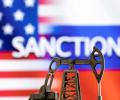
'Geopolitical stability could remove the crude oil risk premium.'

India's pharmaceutical exports to Iran have been hit owing to depleting rupee reserves in the West Asian country because of India stopping the import of crude oil from it in 2019 following US sanctions. Pharmaceutical exports dropped 71.25 per cent in April-August this year over the same period last year. The data from the Pharmaceutical Exports Promotion Council (Pharmexcil) showed exports to Iran had declined 31.29 per cent in 2022-23 as against the previous financial year.
US sanctions against Iran kick in from November 4, which will block payment routes. Sources said India and Iran are discussing reverting to rupee trade after November 4.
Given that India will get a huge part of its oil supplies from Iran through its government-owned oil PSUs, any unwelcome shocks in global crude rates could be absorbed well enough.
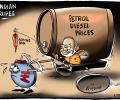
One of the major advantages of buying Iran crude is the additional credit period of 90 days that the country gives to India, compared to 30 days by other countries.
Western sanctions aimed at crippling Iranian finances by drying up buyers for its crude oil, had last year banned insurance cover to ships carrying Iranian oil.
Iran has offered discounts on crude oil price and free shipping if India agrees to buy more of its oil.
Oil prices jumped nearly $3 a barrel and gold and safe-haven bonds rallied on Friday after the killing of top Iranian commander Qassem Soleimani in an airstrike by the US in Baghdad.

In order to facilitate purchase of crude oil from Iran, the Finance Ministry has issued a notification exempting payments made in Indian rupee for such imports from any local tax.

Indian Navy's destroyer INS Kochi responded following the attack on the vessel, MV Andromeda Star, on April 26, officials said, adding all the crew members are safe.

Oil accounts for about a third of India's total imports and higher dollar prices combined with a rupee near all-time lows have increased its cost.

India is the second largest buyer of Iranian crude, after China.

The sanctions have a singular purpose, denying the world's largest state sponsor of terrorists the capacity to do things like they did this past couple weeks, attempted assassination campaign in the heart of Europe, said US Secretary of State Mike Pompeo.

A spokesman for Gibraltar's government also confirmed that police proceedings against four members of the crew had ended.
Faced with soaring demand, stagnant output at home and a need to diversify from Iranian crude imports lost to Western sanctions, Indian oil companies are hungry for deals like Oil and Natural Gas Corporation's ( ONGC's) Kashagan buy that promise supplies sooner rather than later.
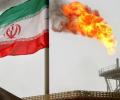
Iran has offered to help India meet its energy needs by relaunching rupee-rial trade for export of oil and gas, said Iranian ambassador to India Ali Chegeni. Chegeni said if both the countries resume rupee-rial trade, bilateral trade can touch $30 billion. Iran used to be India's second largest oil supplier but New Delhi had to halt imports after the former US president Donald Trump withdrew from the nuclear deal with Iran and re-imposed sanctions on its oil exports.
'Indian and Iranian sources both confirmed to me that India and Iran are moving ahead to implement a payment system on buying oil from Iran and hope to finalise it very soon,' says Aveek Sen.
